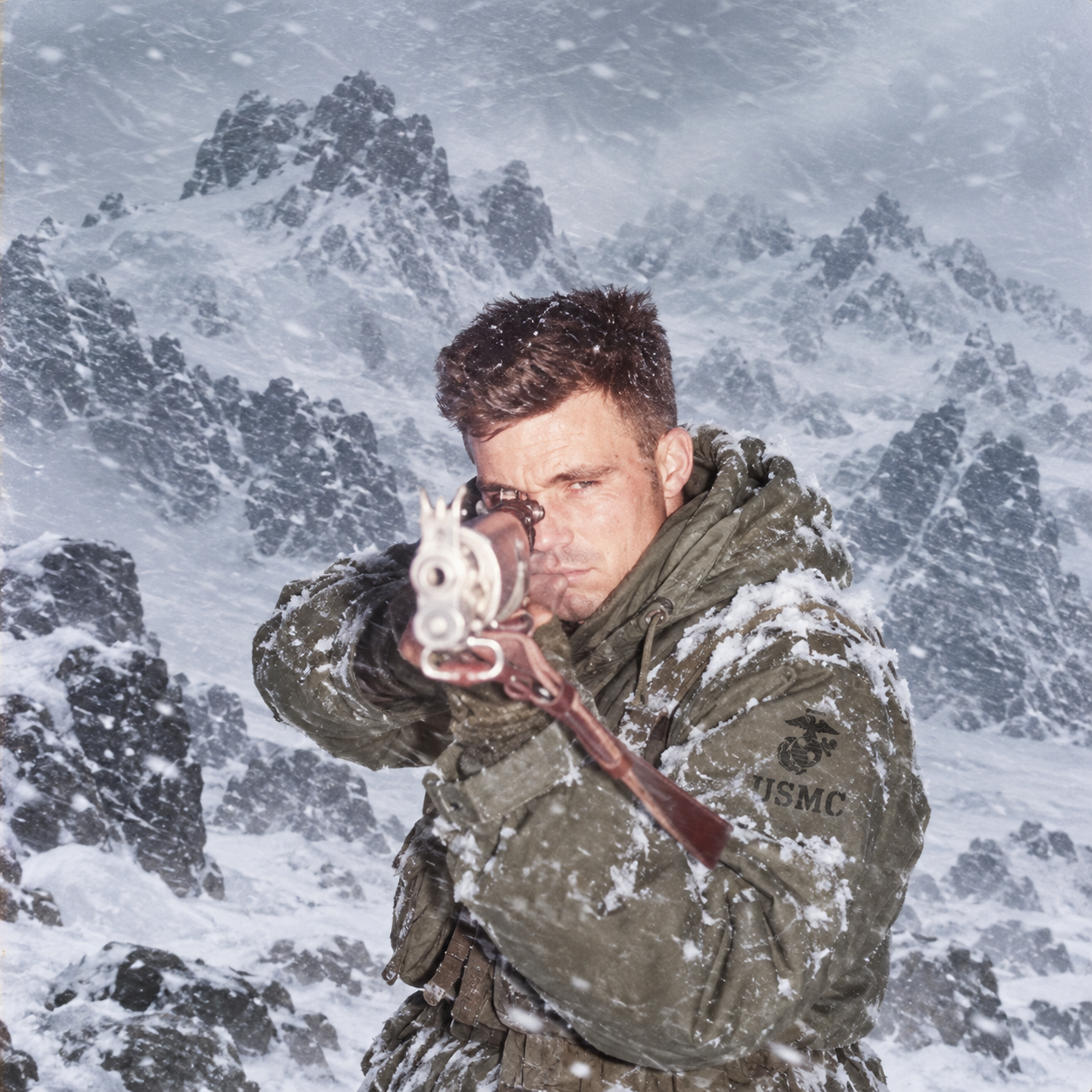
A Marine’s Memory from the Cold War
There are things a man remembers for sixty years with surprising clarity.
He may forget the official name of an operation. He may forget the exact date. He may even forget the names of some of the men who were standing beside him.
But he remembers the cold.
I certainly remember the cold.
It was late December, just before Christmas, during my thirteen-month tour in Iceland with the United States Marine Corps. Somewhere in an old military record there is probably an official name for the NATO exercise we were participating in. After all these years, that name has escaped me.
The memory hasn't.
I remember Dan Heysler. I remember Cliff Kelly and Brent Fertag. There were several other Marines with us whose names have faded with the passing years.
We were young Marines, thousands of miles from home, operating in one of the most unforgiving environments I had ever seen.
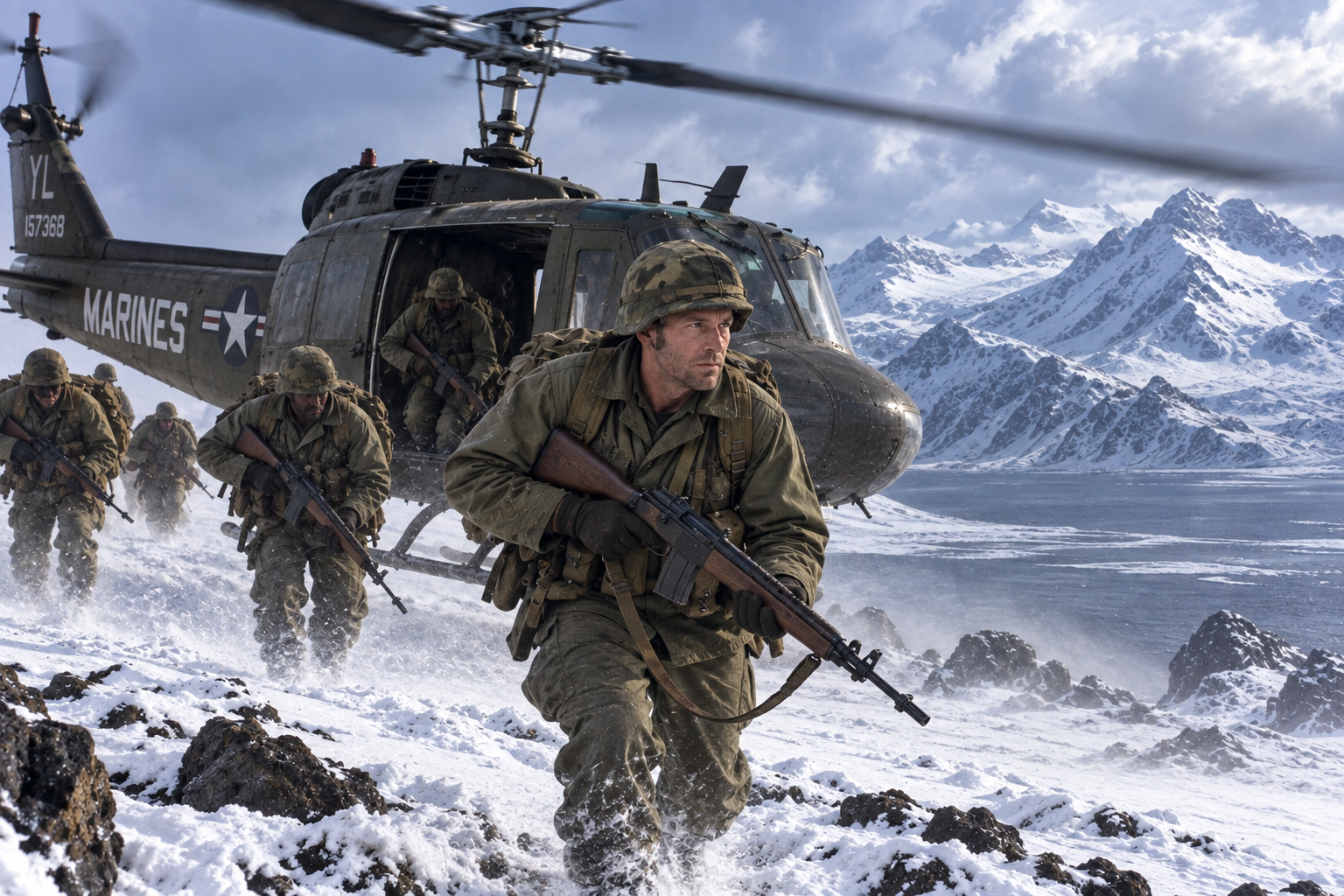
And we were about to make a simulated combat assault from a helicopter.
December in Iceland is a world unto itself.
The days are incredibly short. The sun barely makes an appearance before darkness begins reclaiming the landscape. Snow and wind can sweep across the countryside with tremendous force, sometimes reducing the world around you to little more than swirling white.
That was the Iceland I remember.
We were bundled in our Marine Corps cold-weather gear, carrying our rifles and whatever equipment the exercise required. The helicopter carried us out across that frozen landscape toward the designated landing area.
Inside the aircraft, conversation wasn't necessary.
The engines and rotors supplied all the noise anyone could want.
Then came the moment every Marine aboard knew was coming.
We were going in.
The helicopter descended toward the Icelandic terrain. Snow whipped beneath the rotor wash. The ground disappeared and reappeared through the blowing white.
Then we were down.
Move!
We came out of that helicopter fast.
There wasn't time to stand around admiring the scenery.
Boots hit the frozen ground and Marines scattered away from the aircraft, rifles in hand, moving into position exactly as we had been trained to do.
The rotor wash blasted snow across us.
The wind hit like a wall.
For a few moments the helicopter seemed to fill the entire world—engines screaming, blades pounding the air, snow swirling everywhere.
Then it lifted away.
And suddenly the sound began disappearing into the Icelandic sky.
There we stood.
A handful of United States Marines in the middle of Iceland in late December, participating in a simulated assault during the Cold War.
Looking back today, it is easy to call it a training exercise.
At the time, however, the Cold War was very real.
The Soviet Union was on the other side of the world we were defending. Iceland occupied a strategically important position in the North Atlantic, and the men stationed there understood that we weren't simply occupying another military post.
We were part of a much larger defense.
But I don't remember thinking about international strategy when I stepped out of that helicopter.
I remember the wind.
I remember the snow.
I remember trying to keep my footing.
I remember my rifle in my hands.
And I remember the Marines beside me.
Dan Heysler.
Cliff Kelly.
Brent Fertag.
And several others whose names I wish I could remember today.
We were young then.
Christmas was approaching, our families were thousands of miles away, and instead of sitting around a Christmas tree we were running across frozen Icelandic ground as part of a NATO field exercise.
At that age, you don't stop and think:
"I need to remember this because someday I will be an old man looking back on it."
You simply do your job.
You follow your training.
You stay with the Marines beside you.
And you keep moving.
More than sixty years have passed since that December day.
The helicopter is gone.
The storm passed long ago.
The Cold War eventually ended.
And those young Marines scattered across the world and went on with their lives.
Yet sometimes, when I see a picture of Marines coming out of a helicopter into blowing snow, I am no longer an old Marine remembering something that happened decades ago.
For just a moment, I'm there again.
I can almost hear those rotor blades.
I can feel that Icelandic wind against my face.
I can see the snow blowing across the ground.
And somewhere beside me are Dan, Cliff, Brent and the other Marines.
Young again.
Rifles in our hands.
Moving away from that helicopter into the storm.
Semper Fi.
Michael Cunningham Sr.
United States Marine Corps, 1962–1966